

Solutions
Securely accept, manage, and make payments through one point of integration


Home to 6.11 million people, Singapore is one of Southeast Asia’s financial and business hubs, with a GDP of over US$574.18 billion.
It has also firmly cemented its status as a global technological leader: Singapore ranks #1 worldwide in technological infrastructure, according to the IMD World Competitiveness Yearbook 2025, and the country boasts a tech-savvy population that is quick to adopt innovations such as digital payments.
Digital payments reign supreme in Singapore, supported by near-universal smartphone penetration and progressive government efforts to transform Singapore into a digital economy. According to PWC and the Singapore Fintech Association (SFA)’s joint report, Payments’ State of Play 2026, Singapore’s digital payments market is projected to expand by a compound annual growth rate (CAGR) of 18.3% to reach USD$480.6 billion by 2030.
As highlighted in 2C2P’s IDC infobrief How Southeast Asia Buys and Pays 2025, a key shift in recent years is Singapore’s definitive transition toward real-time payment (RTP) rails and wallet-led checkout experiences. This is amplified by developments in regional payment connectivity across Southeast Asia, with local QR systems like Singapore’s PayNow linking up with counterparts such as Thailand’s PromptPay to create a seamless regional cross-border mesh.
In this article, we explore Singapore’s most popular payment methods, including:
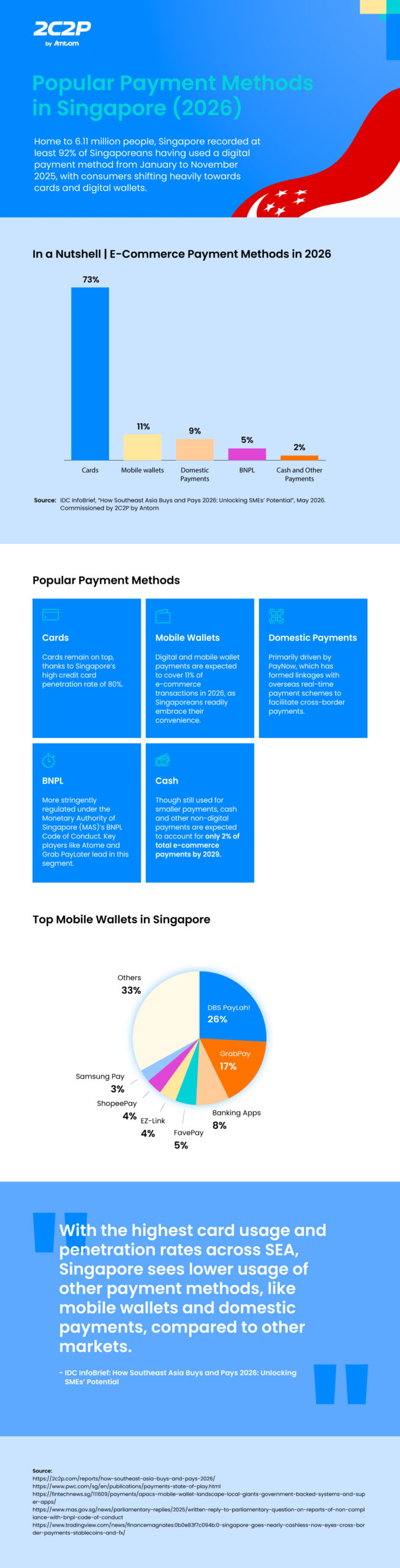
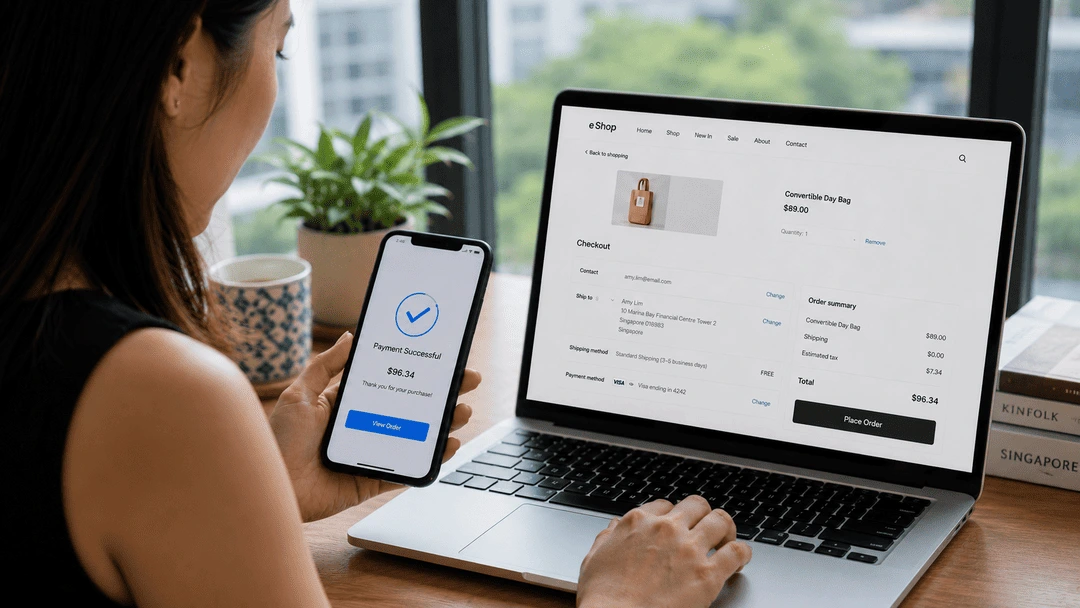
Singapore leads in credit and debit card usage for online spending in Southeast Asia, with the highest credit card penetration rate in the region, according to 2C2P’s IDC Infobrief 2026. The same infobrief also highlights that card payments constitute an estimated 73% (US$8.3 billion) of total e-commerce transactions in 2026, and are expected to remain strong, reaching 76% (US$9.88 billion) by 2029.
These figures are corroborated by GlobalData, which estimates Singapore’s card payments market to grow by 6.2% to reach S$158.2 billion in 2025. Of this number, credit and charge card payments take the lion’s share at 67.6% (S$107 billion), while debit card payments account for 32.4% (S$51.2 billion).
Credit and charge card payments are further projected to grow by 9.2% to reach S$116.8 billion (US$88.4 billion) in 2026.
Evidently, cards remain the backbone of online spending in Singapore, and this is driven by several factors:
Although less popular compared to cards, digital and mobile wallets still hold a respectable position as the second most preferred payment method in Singapore. According to 2C2P’s IDC InfoBrief 2026, payments via digital and mobile wallets make up an estimated 11% (US$1.21 billion) of total e-commerce transactions in 2026, and are projected to hold fast at 10% (US$1.3 billion) by 2029.
Despite this slight decline, IDC research reveals that overall mobile wallet payment transaction values will still increase up to 2028. This is supported by merchant survey data from the IDC enterprise merchant survey commissioned by 2C2P in 2024, where up to 50% of Singaporean enterprise merchants noted a strong preference for mobile wallets and payments amongst their consumers.
According to Fintech News’ analysis of Asia-Pacific’s mobile wallet landscape in 2025, the top mobile wallets used for online shopping in Singapore are:
Mobile wallets are also a critical enabler of cross-border real-time payments, as identified both by 34% of surveyed enterprise merchants and by over 40% of surveyed SME merchants in recent IDC InfoBriefs commissioned by 2C2P. Networks such as that built by Alipay+, which connects local mobile wallets across Southeast Asia and beyond, empower merchants to streamline payments from customers beyond their domestic market.
To this end, DBS and Ant International struck a partnership in 2025 to enhance PayLah! with cross-border capabilities, with users now able to use the app to scan Alipay+ QR codes to pay at over 150 million merchants across more than 100 markets.
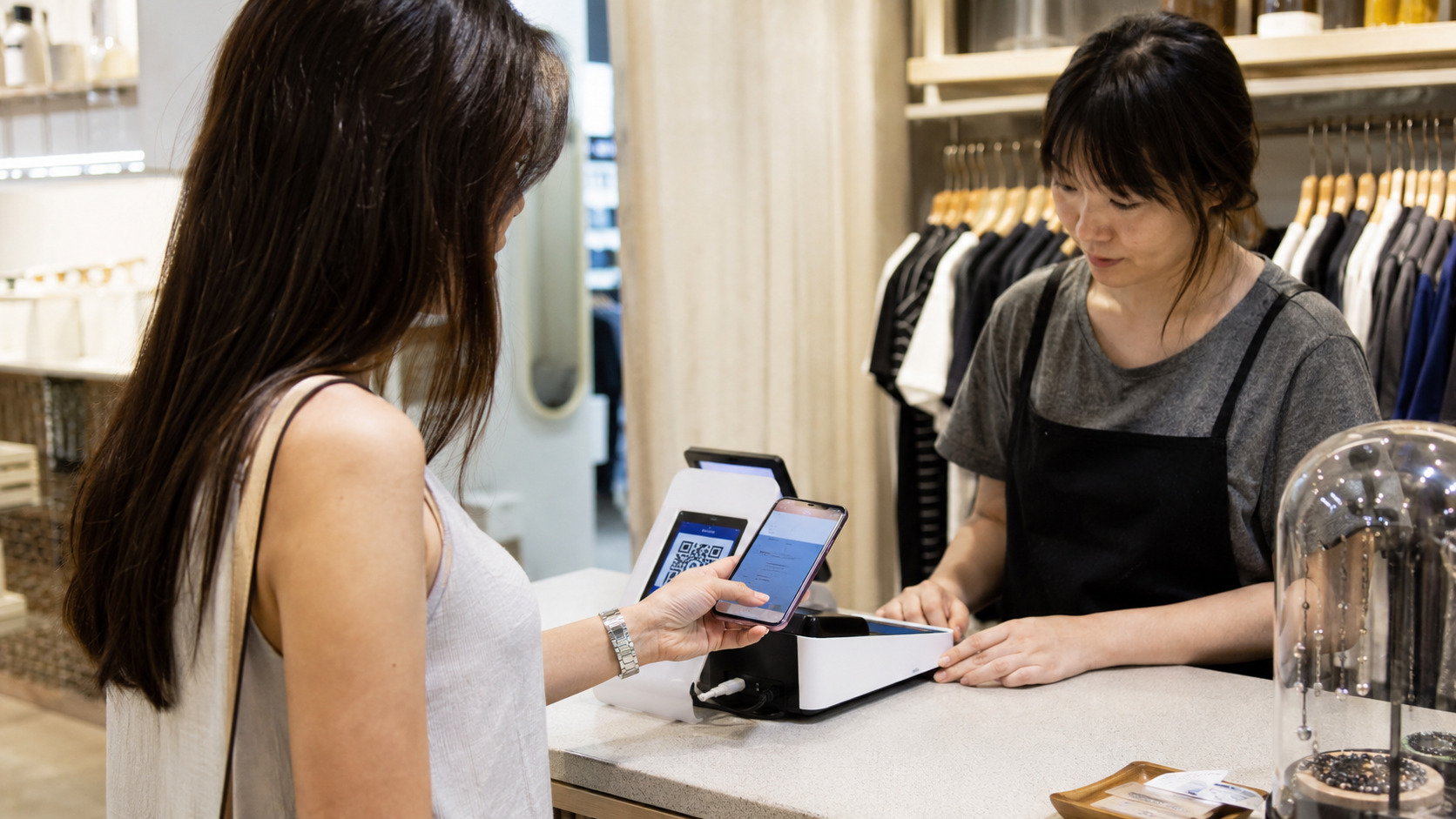
Domestic payments come in at a close third after digital and mobile wallets. Encompassing systems such as PayNow, 2C2P’s IDC InfoBrief 2026 reveals that domestic payments (RTP) account for an estimated 9% (US$990 million) of e-commerce transactions in 2026, with 5.4 million users recorded in 2023.
These numbers are supported by Antom’s Singapore E-Commerce Payment Trends Report, which showcases that 80% of consumers and businesses actively use PayNow to pay and be paid in 2025. On the merchants’ end, payment service providers like 2C2P and its parent company Antom play an instrumental role in helping them seamlessly integrate with PayNow, in turn contributing to PayNow’s massive share (99%) of total bank transfers in Singapore.
Looking ahead, real-time payments (RTP) are expected to boost Singapore’s GDP by S$793.2 million in 2026, which equates to around 0.15% of Singapore’s GDP. In turn, consumers and businesses are projected to save S$319.8 million. This optimistic outlook comes in light of RTP and QR payment interoperability becoming the new default in Southeast Asia, with PayNow having forged linkages with systems such as Malaysia’s DuitNow and Thailand’s PromptPay to facilitate cross-border QR payments.
BNPL‘s popularity may seemingly have receded since its peak in 2020 and 2021, but BNPL has continued to endure as a preferred payment choice for Singaporean consumers, particularly for big-ticket e-commerce goods. According to 2C2P’s IDC InfoBrief 2026, BNPL comes in at a modest 5% (US$550 million) of total e-commerce transactions in 2026, which is expected to increase to 6% (US$780 million) by 2029. In last year’s edition, 29% of surveyed enterprise merchants also reported that they offer BNPL as a payment option, giving Singapore the highest merchant acceptance rate for BNPL in Southeast Asia.
The enduring presence of BNPL is primarily attributed to the Monetary Authority of Singapore (MAS)’s BNPL Code of Conduct, which establishes industry standards to combat the risk of consumer over-indebtedness. Although some BNPL providers have already terminated their services, other services like Atome, Grab’s PayLater, and Shopee’s SPayLater continue providing BNPL as a flexible payment option.
Cash usage remains low, yet it endures as a preferred payment option for small day-to-day purchases. According to 2C2P’s IDC InfoBrief 2026, cash, along with other smaller payment methods like Cash on Delivery (CoD) and traditional ATM transfers, makes up a marginal 2% (US$220 million) of total e-commerce transactions in 2026, projected to continue falling to 0% by 2029.
2C2P’s IDC InfoBrief further revealed that cash usage is especially pronounced amongst SMEs, with 33% of surveyed SMEs in Singapore reporting that they still see heavy cash usage in day-to-day operations. This places Singapore as one of the most cash-heavy countries when it comes to SMEs in Southeast Asia. Data security and fraud concerns, integration difficulties, and limited access to preferred payment options are cited as the top barriers keeping cash-heavy SMEs from adopting digital payments.
On the consumer end, PwC’s Payments’ State of Play 2026 observes that in 2024, ATM cash withdrawals stood at S$55.14 billion. This points towards the everyday Singaporean’s continued use of cash in specific segments like hawker centres, older consumers, and cash-only trades, despite the overall digitalisation of payments in Singapore.
As Singapore transitions into an increasingly borderless digital economy, it is also growing beyond digital adoption to stronger regional interoperability. As mentioned earlier, this has taken root with the successful linkage of systems like PayNow with systems such as Malaysia’s DuitNow, Thailand’s PromptPay, and Indonesia’s QRIS.
Other emerging technologies to watch include Software Point-of-Sale (SoftPOS). Given Singapore’s high digital literacy, we can expect to see an uptick in SoftPOS adoption, transforming everyday smartphones into payment terminals. Agentic AI may also further evolve the e-commerce experience, enabling Singaporeans to deploy autonomous bots to transact securely on their behalf.
Navigating this interconnected, AI-driven future requires robust infrastructure. As the Southeast Asia arm of Antom, 2C2P equips Singaporean businesses with advanced payment capabilities to safely explore emerging technologies like SoftPOS and agentic commerce, seamlessly optimise their payment strategies, and confidently scale across borders.
Learn more about the top payment methods around the world. Check out the other articles in our Popular Payment Methods series:
 Login
Login