

Solutions
Securely accept, manage, and make payments through one point of integration




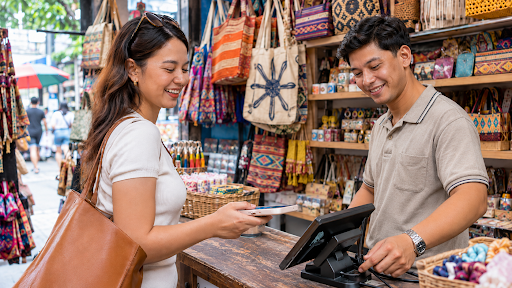
Choosing a payment gateway in the Philippines takes more than comparing fees. Learn what to check, from GCash and QR Ph coverage to BSP licensing, PCI DSS, fraud tools and regional expansion.
Fees are the easiest way to compare payment gateways. In the Philippines, where spending splits across e-wallets, QR codes, bank transfers and cash, coverage is an equally important measure when choosing a payment gateway.
A customer reaching your checkout in the Philippines might pay through GCash, scan a QR Ph code, transfer from their bank through InstaPay, or choose cash on delivery. Each payment method represents a different route to a completed purchase, and the payment gateway behind your checkout determines which of those routes your business can support.
Choosing a payment gateway in the Philippines therefore starts with understanding how your customers actually pay. Digital payments now account for most of the country’s retail payment volume, while cash still plays a significant role in ecommerce. A provider that covers only one part of this market can leave customers without a convenient way to complete their purchase.
For businesses planning to expand, the decision also has implications beyond the Philippines. The right payment infrastructure can make it easier to add markets such as Singapore, Malaysia, Indonesia, Vietnam or Thailand without rebuilding your payments setup from scratch.
Here are six areas to assess when choosing a payment gateway in the Philippines:
The Philippines has a broad payments mix. Digital wallets, domestic payments, cards, BNPL and cash all have a meaningful place in ecommerce, so the methods that matter most will depend on your customer base and transaction profile.
According to the 2026 IDC InfoBrief commissioned by 2C2P and Antom, digital wallets account for an estimated 28% of ecommerce transaction value in the Philippines, followed by domestic payments at 24%, cash and other methods at 22%, cards at 21% and BNPL at 5%. The research projects wallet share to reach 31% by 2029, while cash and other methods are expected to fall to 15%.
GCash and Maya are among the country’s prominent digital wallets, while GrabPay and Coins.ph are also part of the wider ecosystem. QR Ph provides an interoperable QR standard for person-to-merchant payments across participating banks and electronic money issuers.
Cash should also remain part of the assessment. Cash-on-delivery and other offline payment options can still be relevant for merchants serving customers who prefer not to pay online.
Start with your own payment data rather than relying solely on market averages. Break transactions down by order value, customer segment, product category and whether purchases are one-off or recurring. This can reveal where certain payment methods disproportionately affect conversion.
Then compare providers against that payment mix. Ask specifically which wallets, QR schemes, domestic transfers, cards, instalment plans, BNPL options and offline methods are available, which are available immediately, and what the process is for adding new methods later.
Our guide to popular payment methods in the Philippines provides a closer look at the country’s ecommerce payment landscape.
Payment activities in the Philippines operate within a regulatory framework overseen by the Bangko Sentral ng Pilipinas (BSP). The National Payment Systems Act (Republic Act No. 11127) establishes the legal framework for payment systems, while BSP regulations set requirements for payment-system operators and relevant payment activities.
Merchant payment acceptance has its own regulatory requirements. BSP Circular No. 1198 sets out the framework for merchant payment acceptance activities and requires operators engaging in merchant acquisition to obtain the appropriate authority. The circular was amended on 16 June 2026 by Circular No. 1238.
Before entering into an agreement, check:
It is also useful to establish whether the provider acquires payments directly or works with another acquiring institution. This can affect settlement arrangements, contractual responsibilities and the escalation process when payment issues occur.
Do not stop at confirming that a provider operates in the Philippines. Check that its regulatory position covers the specific services you intend to use and the way your business plans to operate.
If regional expansion is part of your plans, ask how the provider’s structure changes when you enter another Southeast Asian market. Understanding this before signing can help you avoid unexpected changes to contracts, settlement arrangements or payment partners later.
PCI DSS is the starting point for assessing payment security. PCI DSS v4.0.1 is the active standard, while PCI DSS v4.0 was retired on 31 December 2024.
When reviewing a provider, check the version it was assessed against, its assessment level, and the qualified security assessor responsible for the assessment. For service providers, a Level 1 assessment represents the most rigorous PCI DSS tier.
It is also worth asking for evidence of PCI 3DS, ISO/IEC 27001, ISO/IEC 27701 and SOC 2 Type 2 where relevant. 2C2P holds these certifications, and the relevant certificates are available on its security page.
Authentication affects both security and the checkout experience. EMV 3D Secure can add an extra layer of cardholder authentication, while risk-based authentication can determine whether a transaction passes without a challenge or requires additional verification.
Tokenisation is particularly useful for merchants that keep payment credentials for future transactions. Tokenised credentials can replace repeated handling of underlying card details, reducing exposure of sensitive payment information. Network tokenisation can also help maintain stored credentials when a customer’s card is replaced or reissued, supporting continuity for subscriptions and repeat purchases.
Philippine businesses should also understand their responsibilities under the Data Privacy Act of 2012 (Republic Act No. 10173), administered by the National Privacy Commission. Ask where payment-related data is processed and stored, what controls protect it, and which responsibilities sit with the merchant versus the payment provider.
Consider security credentials alongside the integration model because how payments are implemented can affect your compliance responsibilities and operational workload.
Ask prospective providers:
Merchant Discount Rate (MDR) is an important part of payment costs, but assess it alongside how effectively legitimate transactions move through the payment process.
For example, a business processing PHP500 million in card payments would save approximately PHP500,000 from a 0.10% reduction in MDR. At the same time, unsuccessful payments can mean lost revenue, so merchants should understand how the provider supports payment approval without weakening fraud controls.
Several factors influence payment success, including the issuing bank, card type, customer behaviour, authentication requirements, and transaction risk. A provider cannot control all of these variables, but its routing, authentication and fraud-management capabilities can still influence the customer experience.
Depending on the provider, fraud management may include automated screening, transaction monitoring, risk scoring and authentication controls. Through 2C2P, eligible merchants can also access Visa Cybersource Decision Manager, which analyses transactions in real time to identify potentially suspicious activity while helping genuine payments proceed with minimal disruption.
The aim is to identify transactions that require intervention without creating unnecessary obstacles for legitimate customers. Poorly calibrated controls can result in false declines, while insufficient controls can increase fraud exposure and chargebacks.
When comparing providers, ask for evidence rather than relying on a headline MDR.
Useful questions include:
The overall cost of accepting payments includes both the fees you pay and the revenue affected by unsuccessful transactions. Payment performance should therefore form part of the commercial evaluation.
The technical setup determines how much responsibility your own team carries before and after launch.
A hosted payment page can reduce development work and let a business rely more on the provider’s payment environment, though it offers less control over the checkout experience. A direct API integration gives the merchant greater control over the customer journey, but usually requires more development, security and compliance work.
The right approach depends on your engineering resources, existing technology stack and how much control you need over checkout. Our guide to optimising the online checkout process covers some of the factors involved.
Operational capability matters just as much. BEST, the Philippine mobile development platform behind the Megapay digital wallet, needed to support customers using different payment methods, including people without conventional credit or debit cards. 2C2P’s payment gateway and 123 service enabled Megapay to accept online and over-the-counter payments while scaling its payment transaction volumes.
“2C2P won us over with their scalability and comprehensive payments platform, which has been a key driver in Megapay’s user acquisition. Their reliable and responsive support team has helped us grow our e-wallet services and demonstrates our strong and synergistic partnership.”
Ferdinand Buensalida Jr, Business Development Manager, BEST
Onboarding is another practical consideration. Before you commit, ask how long account setup, documentation checks and risk review are expected to take. A payment provider may have the right technical capabilities but still create delays if its onboarding process does not fit your launch schedule.
Also clarify:
Evaluate the provider’s operating model as carefully as its technology. Find out who owns the integration, what support continues after launch, how reconciliation data reaches your finance team and whether different payment methods have different settlement arrangements.
These details tend to matter most once transaction volumes increase and payment operations become part of the day-to-day running of the business.
If your business expects to expand beyond the Philippines, assess regional capability before you choose your first payment gateway.
Payment preferences differ across Southeast Asia. Indonesia has strong adoption of QRIS and bank transfers, Malaysia has DuitNow and other digital payment methods, Thailand has PromptPay and mobile wallets, while Vietnam has significant domestic bank payments, QR payments and digital wallets. The 2026 IDC InfoBrief commissioned by 2C2P and Antom provides a comparative view of payment behaviour across the region.
A provider with a regional footprint can potentially reduce the number of separate integrations and payment relationships you need to manage as you expand. However, this should be confirmed at the service level. A provider may operate across several markets without offering identical methods, settlement structures or acquiring arrangements in each one.
Currency is another consideration. Regional expansion can involve Philippine pesos, Singapore dollars, Malaysian ringgit, Indonesian rupiah, Vietnamese dong and Thai baht, along with foreign-exchange spreads and different settlement requirements.
Multi-currency pricing lets customers see and pay in a familiar currency while giving merchants tools to manage foreign-exchange costs. 2C2P’s Multi-Currency Pricing (MCP) supports this approach.
Assess your payment gateway against your expected expansion path, not just your current market.
For each market you may enter, ask:
The answers can make a significant difference to the amount of work involved in regional expansion.
Before signing an agreement, ask the provider to document:
The Philippine payments market is continuing to develop, with several changes relevant to merchants.
In July 2026, BSP and PPMI launched Direct Debit PH, a standardised account-to-account recurring payment facility across banks and e-money issuers. The same changes also increased the InstaPay for Business transfer limit from PHP50,000 to PHP500,000. For subscription businesses and merchants handling larger business-to-business payments, these developments may create additional payment options.
Digital payment adoption continues to increase. According to the BSP’s 2025 Report on E-Payments Measurement, digital payments represented 64.69% of retail payment volume in 2025. This was within the 60–70% target range set for 2028 under the Philippine Development Plan.
Cross-border QR payments remain an area to watch. Malaysia’s DuitNow QR, Indonesia’s QRIS, Thailand’s PromptPay and Vietnam’s VietQR already have cross-border connections, while the Philippines is participating in the BIS-led Nexus scheme, which is intended to connect domestic instant-payment systems across participating countries.
Agentic commerce is a longer-term development. As software increasingly acts on a customer’s behalf, payment systems will need ways to establish that an automated transaction has been properly authorised. Merchants do not necessarily need to act on this immediately, but it is worth understanding how prospective payment partners are approaching emerging payment models.
2C2P provides a full-suite payments platform for online, mobile and in-store payments, alongside issuing, payouts, remittances and digital goods services. With 400+ payment methods, including credit cards and mobile wallets, 2C2P supports enterprises across sectors including technology, aviation, ecommerce, retail and online marketplaces.
If you are looking to build a payment setup for the Philippines or expand across Southeast Asia, talk to us today about your payment requirements.


 Login