

Solutions
Securely accept, manage, and make payments through one point of integration


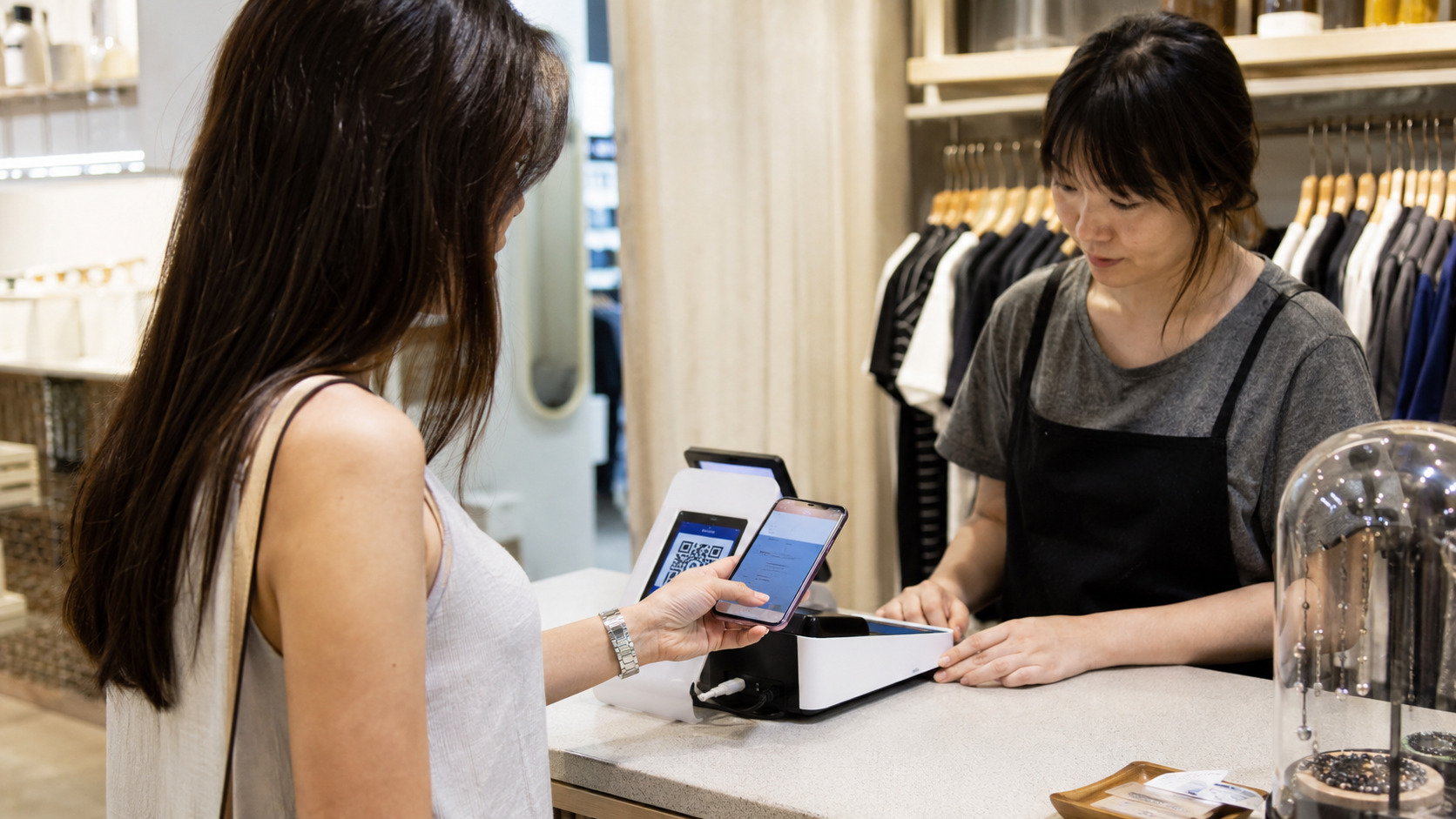
Learn how mobile wallets and e-wallets work in Singapore, why consumers use them, and how you can accept wallet payments to improve customer experience and drive sales.
Singapore is one of the world’s most digitally connected economies, and its payment landscape reflects that. Consumers increasingly expect fast, convenient, and secure payment experiences, whether they are shopping online, ordering food, booking travel, or making purchases in-store.
As a result, while cards remain the dominant online payment method, mobile wallets and e-wallets have become an important part of the payment method ecosystem in Singapore, and e-wallet adoption in Singapore continues to grow.
According to 2C2P’s IDC InfoBrief 2026, mobile wallets account for approximately 11% of e-commerce transaction value in Singapore and remain one of the country’s most widely used alternative payment methods.
For merchants, understanding how wallet payments work and how to accept them is increasingly important for staying competitive.
The terms mobile wallet, e-wallet, and digital wallet are often used interchangeably.
Generally speaking:
Not every product sold as an e-wallet in Singapore works the same way.
Stored-value wallets hold money. GrabPay, ShopeePay and WeChat Pay each hold an E-money Issuance Service licence from the Monetary Authority of Singapore (MAS), which means the customer is spending a balance they have already topped up.
Card-credential wallets do not hold money. Apple Pay and Google Pay pass the payment through to the customer’s underlying card, so you are still processing a card transaction with card economics behind it. Apple Pay always substitutes a tokenised device account number for the real card number. Google Pay does the same for in-store contactless, though at online checkout it may return either a device token or the card the customer has saved to their account, depending on how it was stored.
For merchants, the distinction matters less than the outcome: enabling customers to pay using their preferred wallet payment method.
Several factors have contributed to the growth of mobile wallet usage in Singapore.
Consumers can complete purchases without manually entering card details or carrying physical cash. Wallet payments often require only a few taps or a QR code scan.
Reducing checkout friction is especially important for e-commerce merchants. Wallets can streamline the payment process and help reduce cart abandonment.
Many wallet providers offer cashback, rewards points, vouchers, or merchant promotions that encourage repeat usage.
The widespread adoption of SGQR has made QR-based wallet payments familiar to Singapore consumers. Many merchants can accept multiple payment methods through a single QR code infrastructure.
Singapore’s high smartphone penetration and digitally savvy population continue to support the adoption of wallet payments across both online and offline channels. According to Singapore’s Infocomm Media Development Authority (IMDA), smartphone penetration in Singapore exceeds 97%.
The Singapore market includes both domestic and international wallet providers. No official sources monitor and publish verified wallet market shares for Singapore, so available rankings come from industry analysis rather than official data.
Some examples of wallets that are most likely to appear at a Singapore checkout are:
GrabPay is one of the most recognised digital wallets in Southeast Asia. It allows users to make payments across a broad network of merchants while earning rewards through the Grab ecosystem. GrabPay is supported across Singapore and several neighbouring markets, making it particularly useful for regional merchants.
GrabPay is one of the most recognised digital payment options in Southeast Asia. Its presence across multiple markets offers added convenience for consumers, who can use a single Grab app when travelling across the region. In their primary market, users can pay with their Grab Wallet balance in local currency, while GrabPay also enables seamless payments when travelling to other markets, such as Malaysia, using a linked credit card as the fund source.
DBS PayLah! remains one of Singapore’s most widely used local wallet solutions and is commonly used for both peer-to-peer and merchant payments. It is among the most frequently used mobile wallets for online shopping in Singapore.
ShopBack Pay combines payment functionality with rewards and cashback incentives, making it attractive for merchants seeking to drive customer engagement and repeat purchases.
FavePay is a popular local wallet and deals platform that combines payments with merchant promotions and cashback-style rewards, making it a frequent option at retail and F&B checkouts in Singapore.
Although technically tokenised card wallets rather than stored-value wallets, Apple Pay and Google Pay are commonly used by Singapore consumers for contactless and online payments.
Alipay+ is a unified network that allows businesses to accept payments via more than 50 mobile payment providers across over 220 markets.
SGQR
Stored-value wallet payments generally operate through scanning rather than tapping, which is where Singapore’s QR infrastructure comes in. SGQR is a label standard co-owned by MAS and IMDA that allows businesses to accept multiple QR payment options via one QR code.
SGQR+ goes further, letting businesses accept a wide range of schemes through a single acquirer instead of a separate arrangement per wallet. In a proof of concept run through November 2023, the average participating merchant went from accepting three payment schemes to twelve. NETS rolled it out islandwide a year later, across 24,000 acceptance points, rising past 35,000 once hawkers were included.
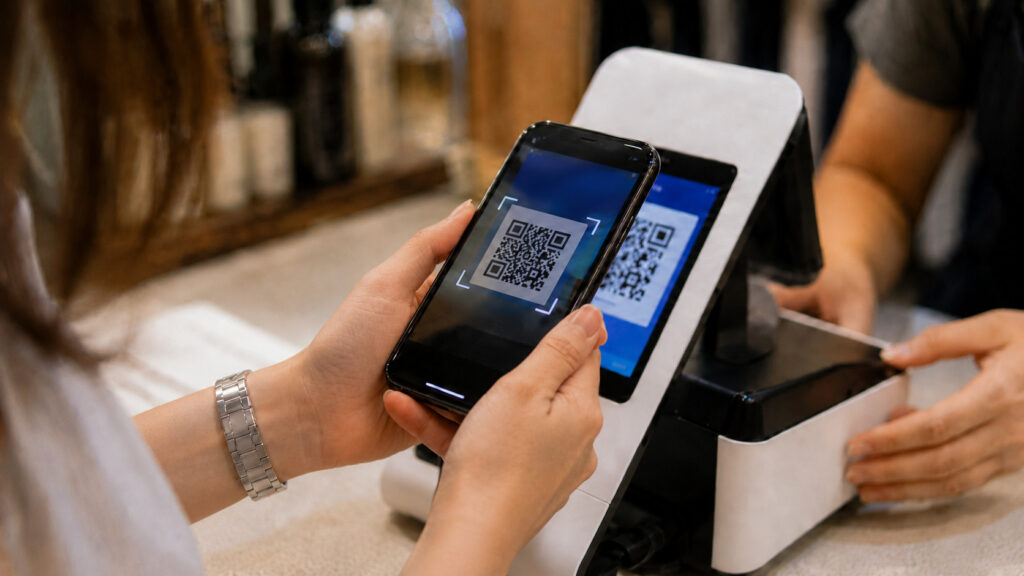
For merchants, accepting wallet payments is about more than simply offering another checkout option.
When shoppers can pay with a wallet they already use and trust, especially one that supports one-tap or QR checkout, friction drops and completed transactions rise. This effect is particularly strong on mobile, where long checkout forms are a common reason for abandonment.
Singapore consumers use a mix of stored-value wallets (GrabPay, PayLah!, FavePay) and card-credential wallets (Apple Pay, Google Pay). Offering only cards means you miss a meaningful share of ready-to-pay customers.
The same wallets work online, in-app, and in-store via SGQR. Accepting them through a single provider lets you deliver a consistent payment experience across every channel without managing multiple integrations.
Networks like Alipay+ let Malaysian, Indonesian, Chinese and other visitors pay with the wallets they already have. This is increasingly important for retail, F&B and travel merchants in Singapore.
Faster, familiar checkouts reduce drop-offs and support repeat purchases, especially when the wallet is tied to rewards or cashback the customer already values.
The simplest way to accept wallet payments is through a payment provider that supports multiple payment methods through a single integration.
Rather than integrating individual wallets one by one, merchants can work with a payments platform that provides access to a broad range of digital wallets, cards, domestic payment methods, and alternative payment options.
This approach can help merchants:
For merchants operating across Southeast Asia, this flexibility becomes increasingly important because payment preferences differ significantly between markets.
One of the most common mistakes businesses make is assuming that payment behaviour is the same across Southeast Asia.
While Singapore consumers continue to rely heavily on cards, other markets often show stronger wallet adoption.
For example:
| Market | Popular Wallet Examples |
| Singapore | GrabPay, DBS PayLah!, FavePay, Alipay+ |
| Malaysia | Touch ‘n Go eWallet, GrabPay |
| Thailand | TrueMoney, LINE Pay |
| Philippines | GCash, Maya |
| Indonesia | GoPay, OVO, DANA |
| Vietnam | MoMo, ZaloPay |
A payment strategy that works in Singapore may not deliver the same results elsewhere. Merchants expanding regionally should evaluate local payment preferences in every market they enter.
Security remains a key consideration for both merchants and consumers.
Most modern wallet providers use multiple security measures, including:
Merchants should also ensure they work with regulated payment providers that maintain appropriate compliance, security, and fraud prevention standards.
In Singapore, payment service providers operate under the oversight of the Monetary Authority of Singapore (MAS), helping to support a secure digital payments ecosystem. 2C2P itself holds a Major Payment Institution licence under Singapore’s Payment Services Act.
Mobile wallets are expected to remain an important part of Singapore’s digital payments landscape. While cards continue to dominate online spending, wallet transaction values are projected to grow as consumers embrace digital-first payment experiences. Enterprise merchant research commissioned by 2C2P also found strong consumer preference for mobile wallet payments among Singapore shoppers.
Wallets are also expanding their role by offering additional payment flexibility through PayLater options, such as GrabPayLater and ShopeePayLater. These services allow customers to spread payments across flexible tenures, including 3, 6, or 9 months, adding more choice to the checkout experience.
For merchants, the focus should not be on choosing between cards and wallets, but on providing customers with the payment methods they prefer, including cards, wallets and wallet-based PayLater options, wherever and however they choose to shop.
As consumer expectations continue to evolve, e-wallets and mobile wallets in Singapore have become an essential part of the payments landscape. From GrabPay and PayLah! to international wallet networks such as Alipay+, wallet payments provide customers with a fast, convenient, and familiar way to pay.
Merchants that support a broad range of payment methods are better positioned to improve checkout experiences, increase conversion rates, and support future growth both in Singapore and across Southeast Asia.
2C2P helps businesses accept payments across online, mobile and in-store channels through a single integrated platform. With access to a wide range of payment methods across Singapore and Southeast Asia, businesses can simplify payment operations while delivering the payment experiences their customers expect.
Speak with our payment experts today.
 Login
Login